

 Priority Technologies
Responsibility-by-design: guidelines for managing responsibility in innovation strategies
Are you involved in Research and Innovation management and are interested in learning more about how to understand, anticipate and manage the impacts of technological development in your organization or project?
After long preparation, guidelines are available that establish a new reference point for managing rresponsibility in innovation strategies.
The enabling and transformative technologies they have an increasing impact on our daily lives, our society and the environment. Their disruptive character and their role in digital and ecological transition ongoing are widely recognized.
Technology developers have a greater responsibility to create innovations that generate benefits and value for the organization, its shareholders and stakeholders, and for society.
The CWA 17796 builds on existing national, European and international standards and policies on Corporate Social Responsibility, quality, risk and innovation management, providing a management standard (Plan-Do-Check-Act cycle) focused on research and innovation practices.
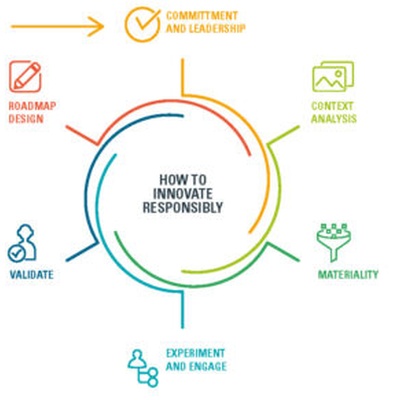
It provides guidelines for the development of long-term strategies (roadmaps) that integrate considerations on technical, ethical, social, environmental and economic aspects throughout the research, development and design process that leads to innovation.
In addition to helping identify a vision, set of actions and timeline for implementing responsible innovation activities, these guidelines also analyze potential barriers, opportunities and benefits in pursuing them.
The guidelines are accompanied by eight company case studies illustrating its implementation on products using nanotechnology, synthetic biology, Internet of Things and autonomous vehicle technologies.
It is essential that companies identify strategies and practices that adapt to the realities and constraints in which they operate. The roadmap described in these guidelines aims to help them do this. The guidelines include examples of methods for materiality and stakeholder analysis, stakeholder engagement, impact analysis and key performance indicators (KPIs). The proposed list of responsible innovation indicators supports the monitoring of the implementation of responsible innovation principles and actions at company level.
The guidelines were developed by CEN/WS 105 experts, which represent the interests of the different stakeholders - industry, laboratories, public administration, universities and research institutes - based on the project experience PRISM, funded by the EU.
Access the document (reserved for Airi Members): CWA 17796 Responsibility-by-design - Guidelines for developing long-term strategies (roadmaps) to innovate responsibly
The guidelines are available to everyone on the Uni store - Italian standardization body, by clicking here
Download the pilots report with case studies and other supporting documentation
Responsibility-by-design: a management standard to develop technological roadmaps to innovate responsibly
Are you involved in the management of Research and Innovation, and interested in learning
about how to understand, anticipate and manage impacts of technology development in your organization or project?
After much preparation and discussion, we launched a guideline which set a new benchmark to address responsibility in innovation strategies.
Enabling and transformative technologies have an increasing impact on our everyday life, our society, and the environment. Their disruptive character, and their role in the on-going digital and green transition is widely recognized.
Technology developers have an increased responsibility to create innovations that generate benefits and value for the organization and its shareholders and stakeholders and for society.
The builds on existing national, Europe, international standards and policies on corporate social responsibility, quality, risk, and innovation management, providing a management standard (Plan-Do-Check-Act cycle) focusing on research and innovation practices.
It provides guidelines to develop long-term strategies (roadmaps), that integrates considerations of technical, ethical, social, environmental, and economic aspects all along the research, development, and design process leading to an innovation.
Besides helping to identify a vision, a set of actions, and a timeline (roadmap) for implementing responsible innovation activities, this guideline also analyzes the potential barriers, opportunities, and benefits in pursuing responsible innovation.
The guidelines have been accompanied by eight company case studies showing its implementation on products using nanotechnologies, synthetic biology, internet of things, and autonomous vehicles technologies.
It is essential for companies to identify strategies and practices that fit within the realities and constraints in which they operate. The roadmap described in these guidelines aims to help them do just that. The guidelines include examples of methods for materiality and stakeholder analysis, stakeholder engagement, impact analysis, and key performance indicators (KPIs). The proposed list of responsible innovation indicators upholds monitoring the implementation of responsible innovation principles and actions at the company level.
The guidelines have been developed by CEN/WS 105 experts, who represents the interest of the different stakeholders – industry, laboratories, public administration, universities, and research institutes - on the basis of the experience of the EU-funded PRISM project.
Access the document:
CWA 17796 Responsibility-by-design - Guidelines to develop long-term strategies (roadmaps) to innovate responsibly
Download the pilots report and other supporting documentation
You may also be interested in the following content:
-
brand_awareness Priority Technologies: a unique foresight at the national level
-
brand_awareness Extra-mural R&D in 2014 grows to 2.4 billion euros
-
brand_awareness Three calls for research projects in Argentina