

 Priority Technologies
TernAria achieves its objectives and relaunches
The collaborative action between the Bruno Kessler Foundation, Arpa Umbria, local institutions and schools will continue
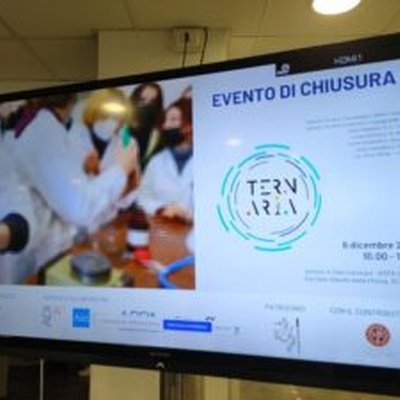
They will be introduced Tuesday 6 December next, from 10 am to 1 pm, at the “Maurizio Santoloci” Conference Room of Arpa Umbria in Terni, the results of the TernAria project.During the conference, the high school students who animated the project will present the results of their work, focusing on the various phases and objectives achieved within the project path.
The TernAria Project
TernAria is a school-work teaching project proposed by Bruno Kessler Foundation (FBK) of Trento which applies the innovative teaching model DomoSens conceived by the Foundation itself and already tested in Trentino.
Thanks to the contribution of the Cassa di Risparmio di Terni and Narni Foundation (call for innovative teaching research projects), this model was applied through the TernAria project in the city of Terni.
The objective of this path was to achieve the creation of an air quality monitoring system composed of a network of low-cost detectors.
6 schools with different scholastic fields participated in the project, each using their own skills, as envisaged by the model.
Each institute, participating with at least one class, worked on specific actions relating to the main vocation of the school, to compose a supply chain capable of covering the entire innovation path: from the assembly of the detectors starting from the components, to the study of the market, to the creation of the business plan up to the communication actions, all in awareness of the reference city context.
One of the relevant aspects of the model that we have tried to best implement in TernAria is that of experimenting with multidisciplinarity and cooperation between the different classes, characteristics that are now essential in working environments.
The project, thanks to the patronage of the Municipality of Terni, will see the installation of two information totems in as many city sites. The information will also concern the quality of the air in those points thanks to the presence of sensors developed within the same project in the totems.
Given the topic covered, since the genesis of the project FBK has had the active collaboration with ARPA Umbria, which made its certified control units available in which those resulting from current FBK research were hosted, copies of those on which the Ternaria schools worked to create.
ARPA was thus a partner-tutor of the work, as they were Industrial Design Association (Veneto and Trentino Alto Adige section) for the design part of the totems, the lawyer Paolo Oliva from Pisa for issues related to the protection of intellectual property and trademarks e the Italian Industrial Research Association (AIRI) for activities linked to market analysis/business plans and support for on-site management of activities.
During the project, thanks to the availability of Busitalia - SITA Nord, the participants had the opportunity to install the control units on two buses and start a completely original experimentation, using the buses as mobile monitoring points.
This result, combined with the agreement with ARPA to maintain the FBK control units operating in its monitoring sites for at least three years, lay the foundations for a continuation of the collaboration between FBK, ARPA and the schools involved.
You may also be interested in the following content:
-
brand_awareness Priority Technologies: a unique foresight at the national level
-
brand_awareness Extra-mural R&D in 2014 grows to 2.4 billion euros
-
brand_awareness Three calls for research projects in Argentina